
It was fascinating to see the ocean transform from aquamarine to murky green as we approached the mouth of South Papua’s mighty Digul River.
Our ship followed the coast north to our next port of call – the village of Agats in the province of Asmat.
The region is one the most remote and mysterious places on the planet. There are at least 44 tribes in the jungles of Papua that have never had contact with the outside world.
Agats is located on the edge of the Asmat Swamp, believed to be the largest alluvial swamp in the world.
Our arrival needed to be planned carefully to coincide with the tides.
During high tide the water can rise up to five metres above sea level, so all buildings and roads in the town are elevated on wooden or concrete structures.
Le Soleal cruised up the river at high tide and needed to remain there during low tide, as there was less than three metres clearance from the bottom of the river.
We were transferred by zodiac to the town’s main wharf and disembarked in pouring monsoonal rain for a guided tour of the local market, museum and church.
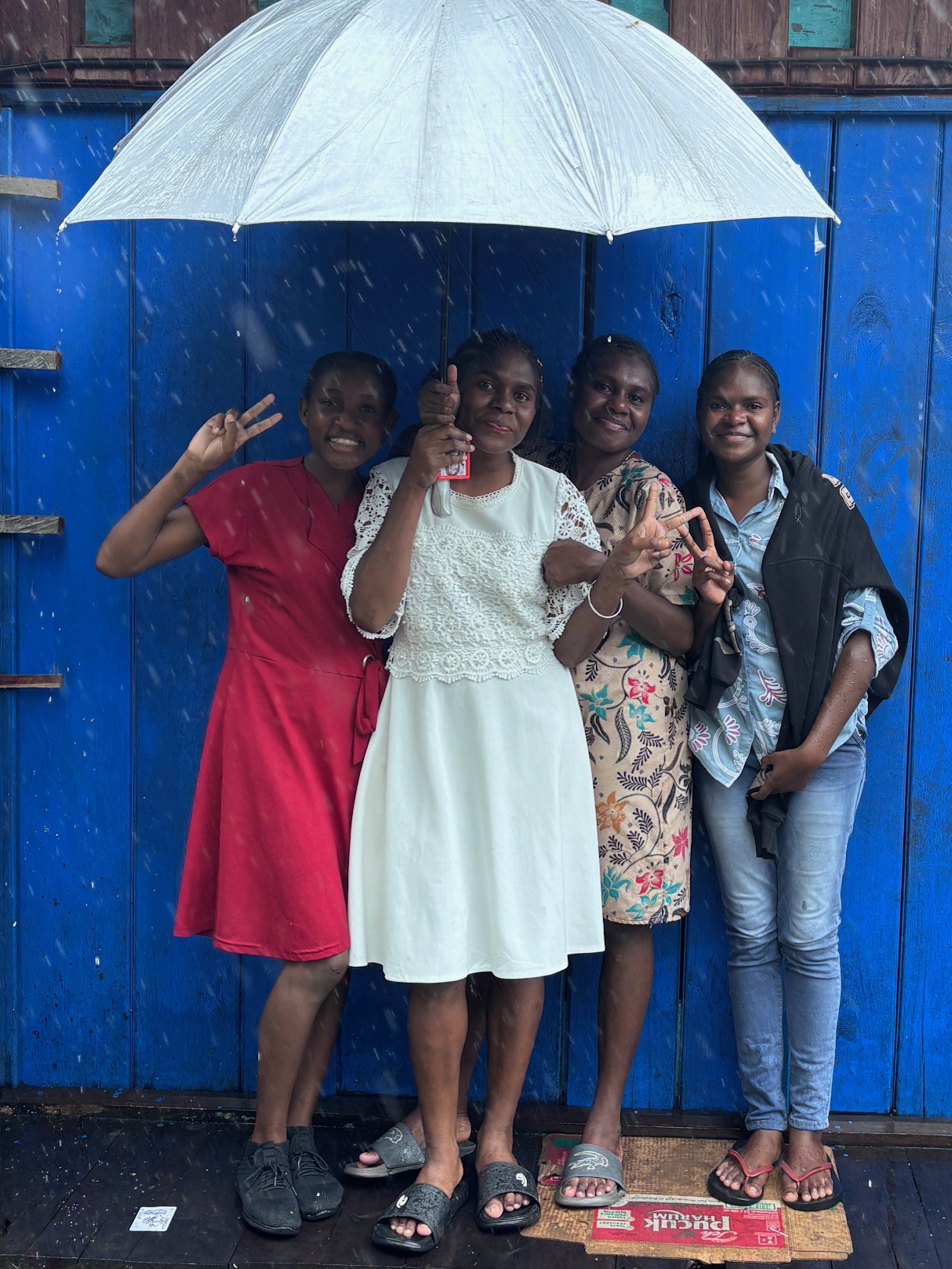
Electric motorbikes whizzed past, baby chicks pecked at the floors of open-fronted stores and local children cheerily waved as we walked past.
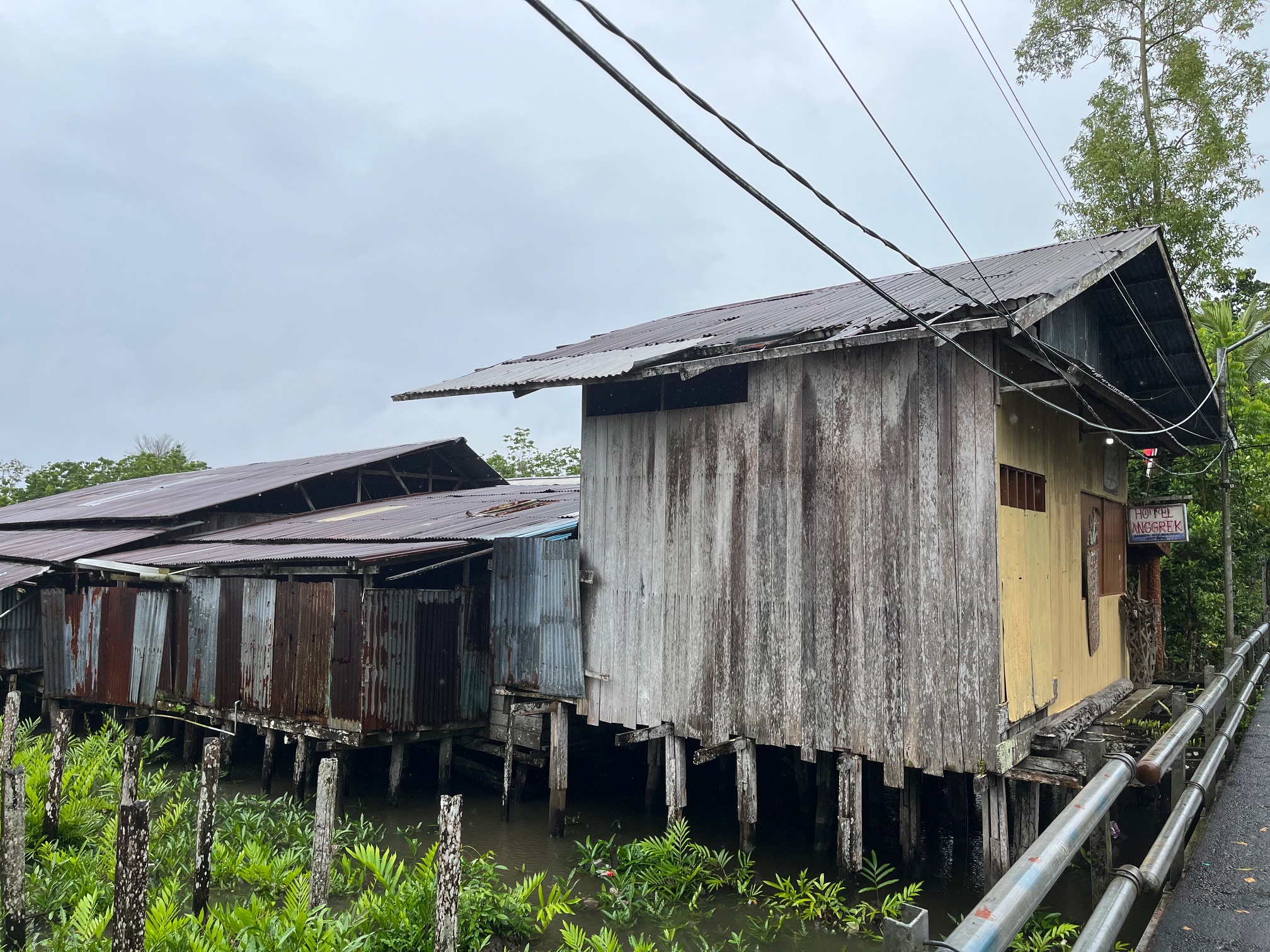
It was surprising to realise that residents spend their whole lives perched above the water, often in very flimsy structures.
This was one of two hotels we saw in the town …
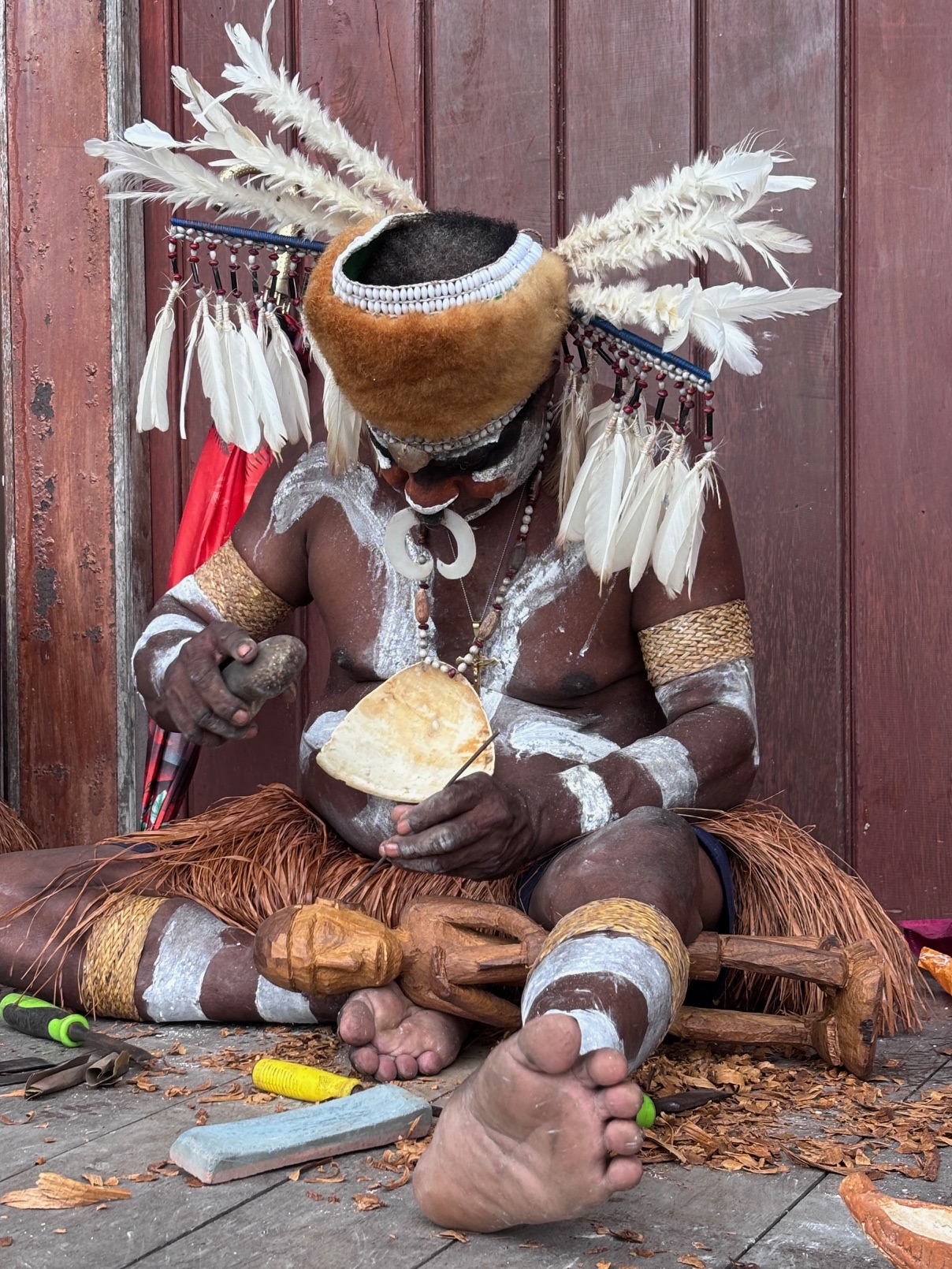
Agats Museum was fascinating, filled with examples of the region’s famed wood carvings. A trio of talented locals sat outside, producing artworks for the museum’s shop.
Afterwards, we returned to the ship to shed our sopping wet clothes and rehydrate before visiting a small, neighbouring village called Syuru.
The Asmat region was once renowned as the realm of head-hunters and cannibals. Thankfully, headhunting practices were banned in 1953, but it was still slightly unnerving to be met by a flotilla of warrior canoes on our arrival in Syuru.
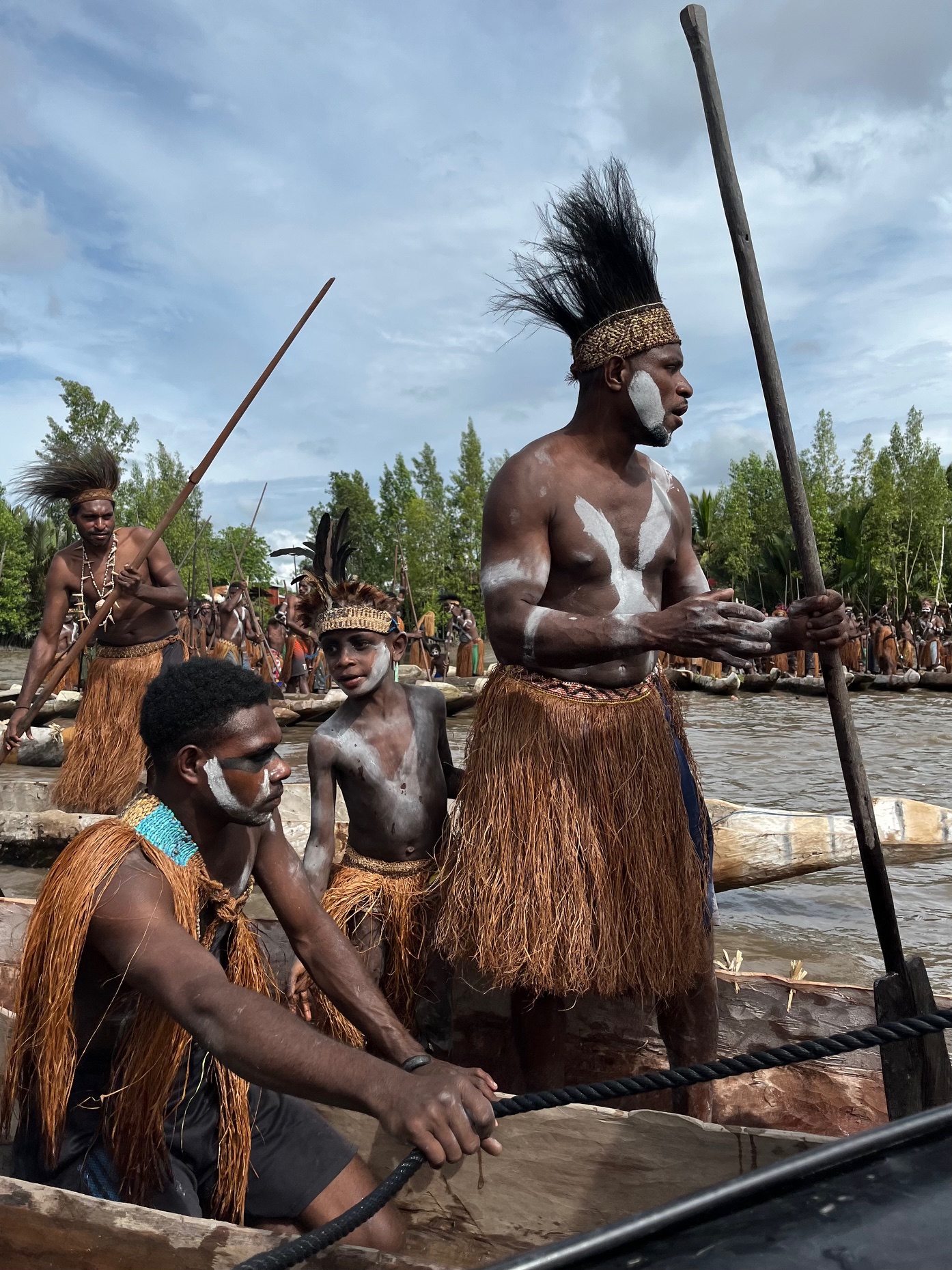
It was also entertaining to see that even warriors wear sunnies these days …
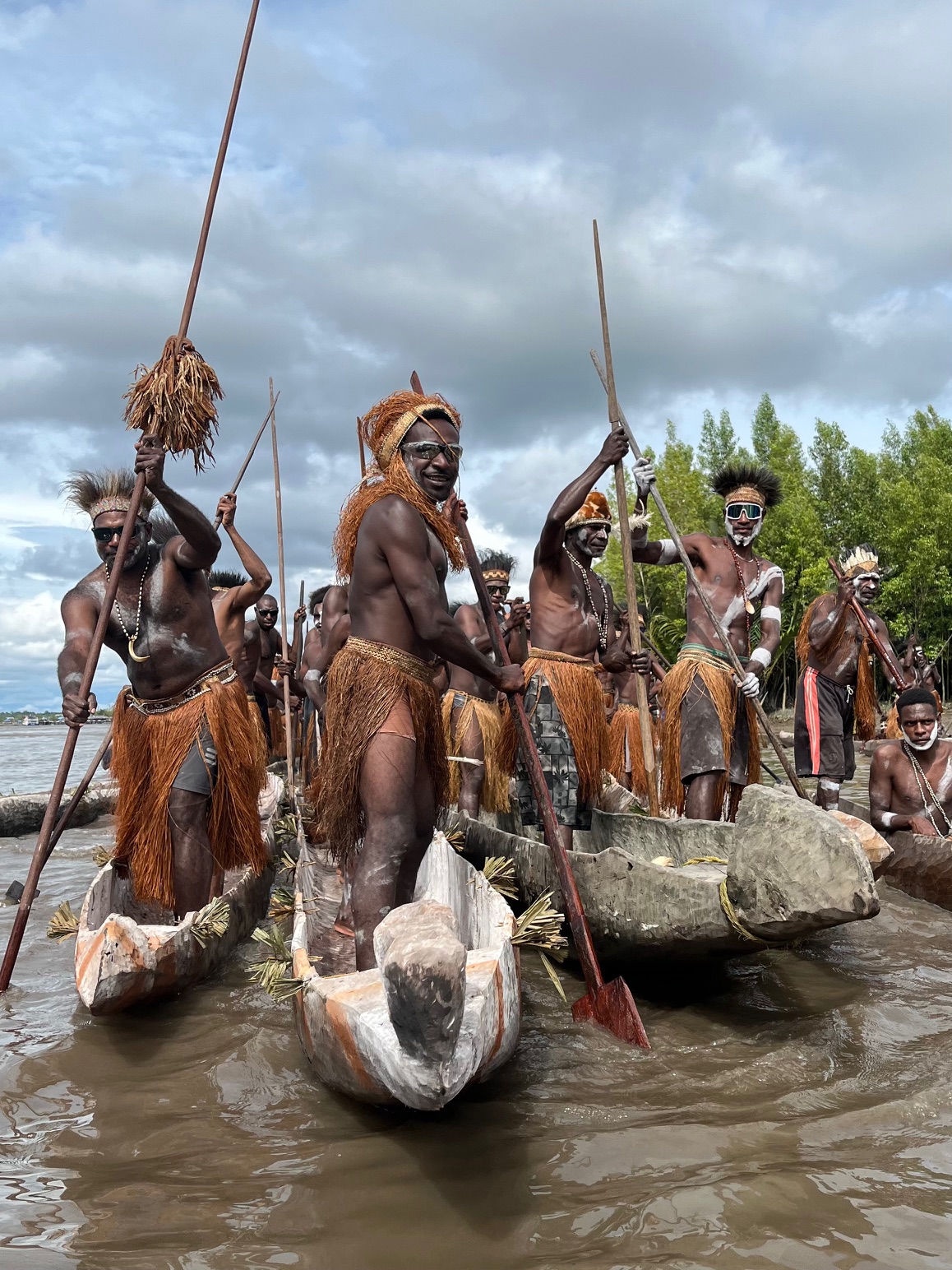
Our zodiacs were surrounded by the warriors, who rhythmically beat their wooden paddles against the sides of the wooden canoes and shouted and sang as they sailed among us.
They led us to a pier and we entered the village, clambering across a precarious wooden bridge on stilts, which was missing numerous slats and swayed at its midpoint.
Then we settled in front of the longhouse alongside hundreds of local women and children in traditional dress. We waited together for the chief to step onto a platform with a posse of warriors, who erected two ceremonial carved poles.
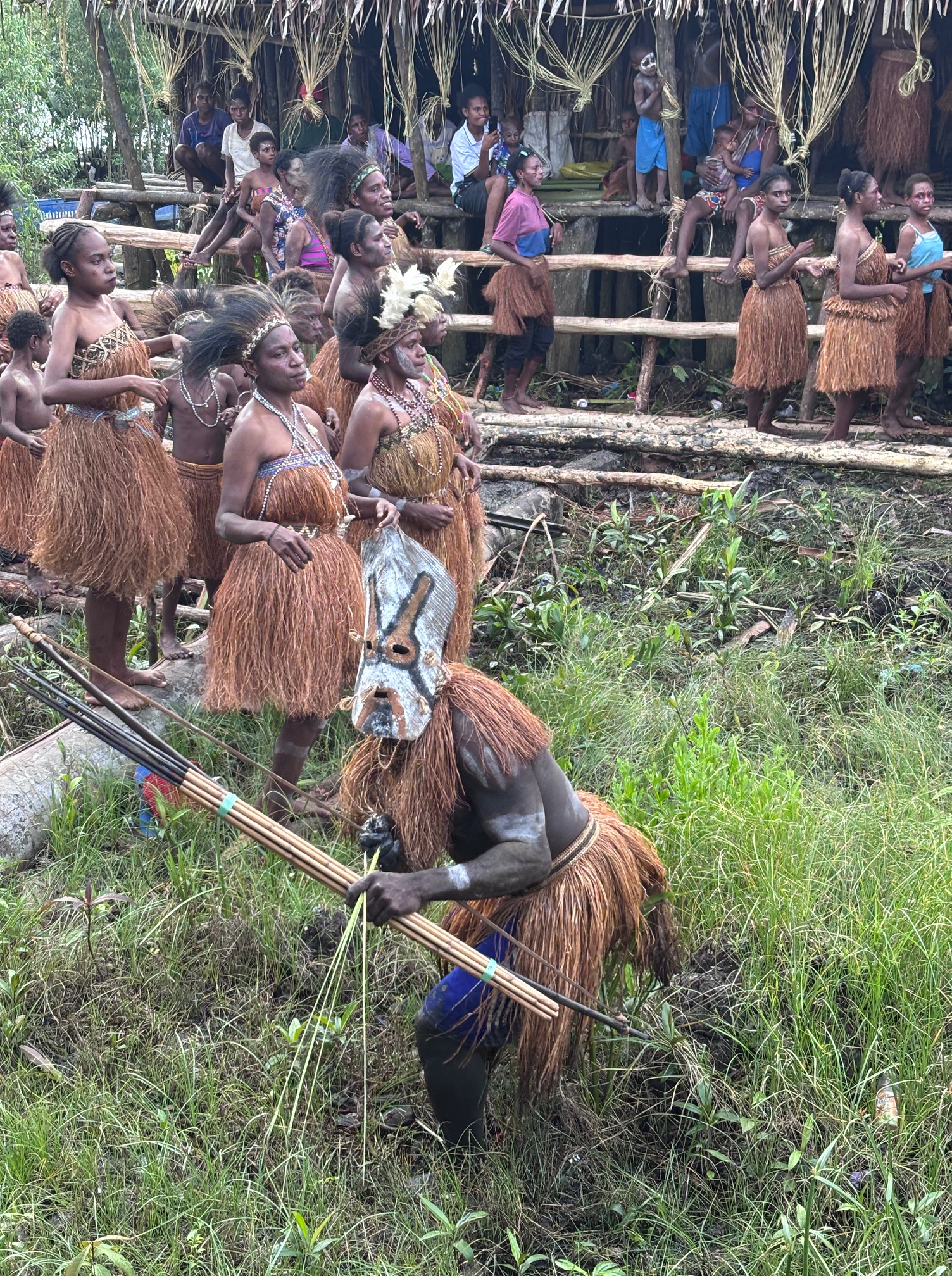
The women and children danced and sang, while a lone warrior darted through the crowds in a mask, wielding a bow and arrow.
The poles were traditionally made to honour tribesmen killed during head-hunting raids. They served as metaphorical canoes to carry the spirits of the dead to the realm of their ancestors.
I was so busy watching the proceedings that I didn’t take a photo of the poles, but they looked much like the ones in the photo, taken by an earlier visitor to the village …

We were awed to experience such an unforgettable day in this remote part of the world.
Song of the day: Queen “We will rock you”
 housegoeshome
Leave a comment